
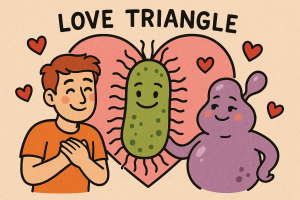
 Love Triangle: You, Bacteria, and Yeast
Our healthy body, especially the GI tract, is caught in a love triangle with bacteria and yeast. This relationship can be supportive and vibrant, or toxic and chaotic, and often a mix of both!
Gut = Immune System Headquarters
Over 70% of our body’s immune system lives in your 30-ft long GI tract — from mouth to anus. Through daily interactions with the environment, our body hosts bacteria, yeasts, viruses, and parasites, totaling up to 100 trillion microorganisms!
What Affects Your Microbiome?
Conditions that affect your biome:
- Environment (air, water, sunlight, soil, altitude)
- Age
- Diet (fiber +nourishment + fermented foods)
- Genetics
- Health status
- Medications (PPIs, NSAIDS, metformin, antibiotics, steroids, statins, antidepressants)
- Genetics
- Existing microbial population
Mycobiome: Yeast in the Gut
Yeast or fungi are naturally found in small amounts in a healthy gut. Yeast supports host immune defense, colon pH balance, toxin neutralization, fiber fermentation, gut barrier integrity, B vitamin production, and neurotransmitter synthesis. Common gut yeasts include Candida kefyr (also found in kefir), Malassezia, Aspergillus, Epicoccum, Saccharomyces (also in kombucha), Alternaria, and Cladosporium.
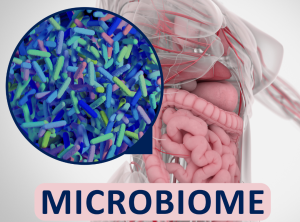 Microbiomes: Bacteria Rule the Gut
Bacteria are the most dominant microbes in humans — scientists have identified over 900 strains in the gut alone. These bacteria communicate with yeast and immune cells, forming a second command center just behind the brain. They are classified by shape, structure, and Gram stain.
Phyla of a Healthy Gut Microbiome
The major phyla include Firmicutes (mostly Gram-positive, some Gram-negative), Bacteroidetes (Gram-negative, anaerobic), and Actinobacteria (important in infants), which make up approximately 90% of the gut microbiota. Minor phyla such as Proteobacteria and Verrucomicrobia comprise less than 10%. Each phylum contains hundreds of strains, contributing to digestion, metabolism, and immunity.
Helpful or Harmful? Welcome to Dysbiosis
Microbes are opportunistic by nature — they grow rapidly when the environment is favorable. Depending on immune system integrity, a microbe can either remain beneficial or become an opportunistic pathogen. Example: Antibiotics kill the harmful invader — but also wipe out beneficial bacteria. Yeast, however, is unaffected. With less competition, yeast or C. diff can overgrow, leading to secondary infections.
Risks
Clostridium difficile (C. diff) multiplies rapidly in the absence of bacterial balance. You’re up to 10 times more likely to develop C. diff with antibiotic use (CDC, 2024). Similarly, Candida can cause vaginal or oral yeast infections after antibiotic use. A strong immune system can neutralize threats, but after antibiotics, pharmacists often recommend taking a probiotic — several hours after the antibiotic and with food. For nature’s probiotics, see the fermented food blog.
Short-Chain Fatty Acids (SCFAs): Postbiotic Powerhouses
SCFAs are postbiotics made when gut bacteria ferment dietary fiber. Acetate fuels muscles, heart, brain, and liver. Propionate boosts GLP-1, regulates blood sugar, and reduces cholesterol. Butyrate stays in the colon, reduces inflammation, and nourishes gut cells.
SCFA Benefits
SCFAs provide energy for colon cells, regulate blood sugar and appetite, improve insulin sensitivity, calm gut and brain inflammation, and support mental health via the vagus nerve.
Lipopolysaccharides (LPS): Friend or Foe?
LPS is a molecule made of fat, sugar, and O-antigen, released by Gram-negative bacteria as they die or divide. It’s used in immunology research to train immune cells — but too much LPS in the bloodstream causes problems.
When Gut Barrier Is Compromised
LPS leaks into blood Triggers systemic inflammation Confuses liver → fatty liver Blocks insulin → insulin resistance Disrupts brain → neurotransmitter issues Contributes to obesity, metabolic syndrome, type 2 diabetes
Gut Testing: From Guesswork to Personalized Health
While fiber is the first step, it’s not enough on its own. Comprehensive gut testing offers a clear picture of your unique gut ecosystem and helps personalize your path to wellness.
✅ With Gut Testing:
✅ Tailored probiotics
✅ Targeted diet strategies
✅ Identify bacteria, yeast, and parasites
✅ Grow beneficial microbes
❌ Without Gut Testing:
❌ One-size-fits-all probiotic
❌ General food advice
❌ Rely on guesswork cleanses
❌ Risk of feeding harmful strains
Whether you want to prevent or are dealing with bloating, fatigue, inflammation, or insulin resistance, gut testing can optimize your plan by revealing exactly what your microbiome needs.
Resources
- Garg, K., & Mohajeri, M. H. (2024). Potential effects of the most prescribed drugs on the microbiota-gut-brain axis: A review. Brain Research Bulletin, 207, 110883. https://doi.org/10.1016/j.brainresbull.2024.110883
- Centers for Disease Control and Prevention. (n.d.). What is C. diff?. https://www.cdc.gov/c-diff/about/index.html
- Wiertsema, S. P., van Bergenhenegouwen, J., Garssen, J., et al. (2021). The interplay between the gut microbiome and the immune system in the context of infectious diseases throughout life and the role of nutrition in optimizing treatment strategies. Nutrients, 13(3), 886. https://doi.org/10.3390/nu13030886
- Di Pierro, F. (2021). Gut microbiota parameters potentially useful in clinical perspective. Microorganisms, 9(11), 2402. https://doi.org/10.3390/microorganisms9112402
- Fusco, W., Bernabeu Lorenzo, M., Cintoni, M., Porcari, S., Rinninella, E., et al. (2023). Short-chain fatty-acid-producing bacteria: Key components of the human gut microbiota. Nutrients, 15(9), 2211. https://doi.org/10.3390/nu15092211
- Zhang, D., Jian, Y. P., Zhang, Y. N., et al. (2023). Short-chain fatty acids in diseases. Cell Communication and Signaling, 21, 212. https://doi.org/10.1186/s12964-023-01219-9
