
Have you heard the news? Big changes will be happening in our food supply. In a news release dated April 22, the FDA announced it will phase out all petroleum-based synthetic dyes from the nation’s food supply. The effort is to transition to natural alternatives.
What’s Being Banned?
By the end of 2026, the FDA plans to phase out six major synthetic dyes:
-
- Red No. 40
- Yellow No. 5
- Yellow No. 6
- Blue No. 1
- Blue No. 2
- Green No. 3
Additionally, the FDA will remove two more dyes in the coming months:
-
- Citrus Red No. 2 (used on orange peels)
- Orange B (used in hot dog/sausage casings)
A separate ban on Red No. 3 was finalized in January 2025, with full implementation by 2027–28.
Why the Change?
Concerns about cancer risk, behavioral effects in children, and outdated safety reviews (some dyes haven’t been reevaluated in decades!) have prompted Health and Human Services (HHS) in getting these harmful dyes out of the food supply. HHS Secretary Robert F. Kennedy, Jr. stated “These poisonous compounds offer no nutritional benefit and pose real, measurable dangers to our children’s health and development. “ Arizona, California, Virginia, Utah, West Virginia have banned these dyes in school foods and products.
What are the dangers of food dyes?
Gut Microbiome Impact: Some studies suggest that food dyes can cause dysbiosis, gut barrier breakdown and systemic inflammation.
Hyperactivity & ADHD-like symptoms in children: These symptoms are most strongly linked to Red No. 40, Yellow No. 5, and Yellow No. 6. Children that are especially sensitive may show hyperactivity and other neurobehavioral issues. Experts believe that behavioral changes may be due to a depletion of minerals that play a role in growth and development, chemical changes in the brain and/or hypersensitivity which can cause inflammation. Currently, Europe requires warning labels on foods with certain dyes due to these risks.
Allergic Reactions & Sensitivities: Yellow No. 5 (Tartrazine) is known to cause allergic responses such as asthma and urticaria.
Cancer Risk: Red No. 3 has been linked to thyroid tumors in rats, leading to its ban from cosmetics and topical drugs in the U.S. but left the dye in our food supply! Various studies have indicated that long-term exposure to petroleum-derived dyes may cause potential DNA damage or carcinogenicity.
Children are more vulnerable to the effects of artificial dyes because they consume more processed snacks per body weight and their developing brains are more sensitive to chemical exposure.
What can you do now to avoid these harmful dyes in foods?
Here is a list of popular food items that contain these dyes.
Candy & Sweets
- Skittles
- M&Ms
- Starburst
- Jolly Ranchers
- Gummy Bears and Sour Gummies
- Ring Pops, Fun Dip, Airheads
Drinks
- Gatorade (especially Orange and Fruit Punch flavors)
- Powerade
- Kool-Aid powder or bottles
- Hawaiian Punch
- Sunny D
- Mountain Dew
- Red sodas
Breakfast Cereals
- Froot Loops
- Cap’n Crunch’s Crunch Berries
- Trix
- Lucky Charms
- Fruity Pebbles
Desserts & Processed Baked Goods
- Pop-Tarts (especially strawberry or blueberry)
- Hostess snacks (Twinkies, Ding Dongs, CupCakes)
- Jell-O and other flavored gelatins
- Ice cream and sherbet with “rainbow” or fruity flavors
- Pudding cups with fruity or neon colors
Snacks
- Flamin’ Hot Cheetos
- Doritos (Nacho Cheese and Cool Ranch
- Cheese balls and cheese puffs
- Pickle-flavored chips
- Colored goldfish or crackers
There are many other foods that contain harmful food dyes. Be sure to read the food labels and choose other healthier alternatives utilizing natural food colorings like beet juice, turmeric, spirulina, annatto, paprika extract, and butterfly pea flower.
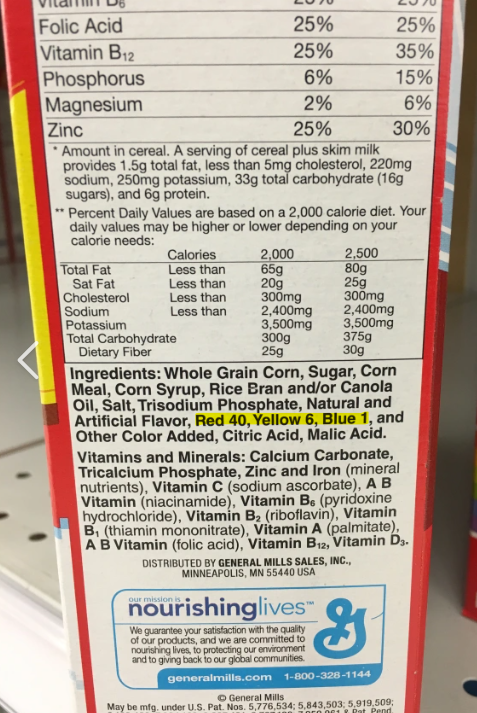

By 2027, most artificial food dyes will be off the grocery shelves. But don’t wait until then! Start now! The best way is to avoid these harmful dyes is to eat real food! Click here to find out what is real food. By selecting food items that do not contain petroleum-based food dyes, you may see immediate improvements in you and your family’s health!
