
As a dietitian, I am often assumed to be the first in line opposing any medication-assisted approach to weight loss. That assumption is wrong. What I do believe, strongly, is that medications are tools — and like any tool, their value depends entirely on how, why, and for whom they are used.
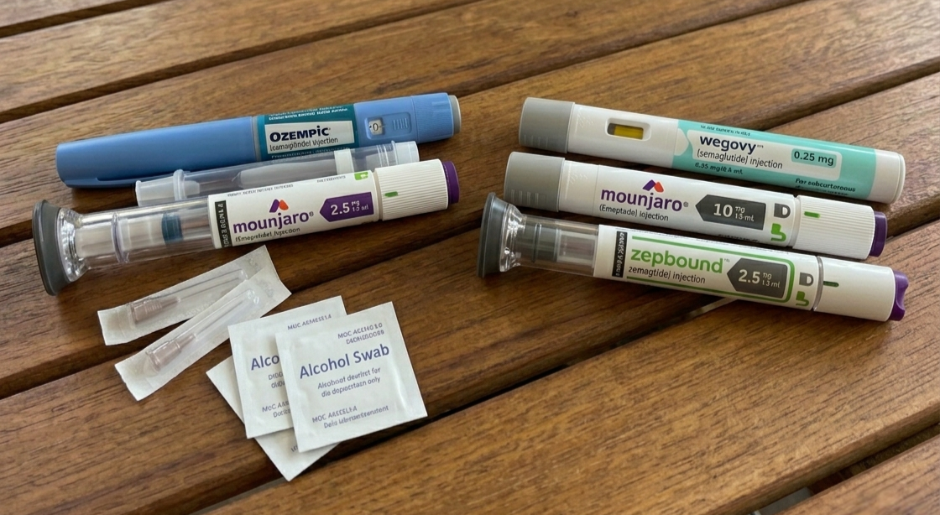
The conversation around GLP-1 medications — names like semaglutide (Ozempic, Wegovy) and tirzepatide (Mounjaro, Zepbound) — has exploded in recent years. They are everywhere: social media, morning news segments, doctors’ offices, and dinner table conversations. And with that surge in attention comes a surge in misunderstanding. So let’s slow down and start with what is actually happening inside the body.
How These Medications Work
GLP-1 stands for glucagon-like peptide-1, a naturally occurring hormone your gut releases after you eat. Its job is to communicate with several systems in your body all at once: it signals your pancreas to release insulin, tells your liver to slow glucose production, and — perhaps most relevant to this conversation — sends messages to your brain that say, “you’ve had enough.”
The medications, aka GLP-1 receptor agonists, mimic and amplify that natural signal. They slow the rate at which your stomach empties, which means food stays with you longer and fullness arrives sooner. They also work directly in the brain’s appetite-regulating centers, particularly the hypothalamus, to reduce hunger and the drive to eat — what is often referred to as “food noise,” that persistent mental chatter about what to eat next. For people who have struggled with relentless hunger, this reduction can feel like quiet they haven’t experienced in years.
The newer dual-agonist medications, like tirzepatide, also target GIP (glucose-dependent insulinotropic polypeptide) receptors, which appear to enhance the effects on both metabolism and weight regulation even further.
The result, for many people, is a meaningful reduction in caloric intake — not through white-knuckled willpower, but through a shift in the physiological signals driving appetite. That distinction matters. A lot.
Who May Be an Appropriate Candidate
These medications are not one-size-fits-all, and they were never intended to be. Clinically, GLP-1 medications are generally considered appropriate for:
-
- Adults with a BMI of 30 or higher (classified as obesity)
- Adults with a BMI of 27 or higher who also have at least one weight-related health condition, such as type 2 diabetes, hypertension, high cholesterol, or obstructive sleep apnea
- Individuals who have made sustained, genuine efforts at lifestyle change and have not been able to achieve or maintain meaningful health improvement
- People with type 2 diabetes who would benefit from improved blood sugar regulation alongside weight management
- Those whose excess weight is creating significant cardiovascular risk — recent data has shown substantial reductions in major cardiac events with semaglutide use
The key word in all of this is health. The appropriateness of these medications should be grounded in a clinical assessment of metabolic risk, quality of life, and realistic goals — not aesthetics alone.
Who These Medications Are Not Right For
Equally important is understanding who should not be using GLP-1 medications, or for whom the risk-to-benefit calculation does not favor their use.
-
- People with a personal or family history of medullary thyroid carcinoma (MTC) or Multiple Endocrine Neoplasia syndrome type 2 (MEN2) — these are contraindications based on animal study findings
- Those with a history of pancreatitis, as there is an associated risk with this class of medication
- Pregnant or breastfeeding women — weight management during pregnancy requires a completely different clinical approach
- People with a significant history of eating disorders, particularly those involving restriction, where further suppression of appetite signals could reinforce dangerous patterns
- Individuals with severe gastrointestinal conditions such as gastroparesis, where slowed gastric emptying could worsen symptoms substantially
- Children and adolescents, except in very specific clinical circumstances under specialist care
There is a category of use I want to address directly and carefully: the prescribing — or self-obtaining — of these medications for women who are already at a healthy weight, whose only goal is to be smaller. When we use powerful appetite-suppressing medications to help women who do not have a clinical indication chase a thinner body, we are not being progressive or supportive. We are reinforcing, with pharmaceutical force, the message that a woman’s worth is tied to her size. That “smaller is always better.” That her body, even a healthy one, is a problem to be solved. This matters far beyond the individual. The way women relate to their bodies and to food is not private — it is inherited. Daughters watch their mothers. Granddaughters absorb what their grandmothers believe about themselves. Nieces notice. When a woman uses a medication not to improve her health but to shrink herself to meet a cultural ideal, she passes that template forward. She teaches the next generation that a body that doesn’t need fixing still needs fixing. As dietitians, and as a society, we have an opportunity to interrupt this cycle. These medications, used appropriately, can be genuinely transformative for people whose health depends on it. Used to feed the relentless “smaller is better” narrative, they simply fund a different chapter of the same harmful story we have been trying to close for decades.
Side Effects to Understand
No medication is without trade-offs, and GLP-1 medications are no exception. Understanding the potential side effects is part of making an informed decision alongside your healthcare team.
Gastrointestinal effects are the most common and include nausea, vomiting, diarrhea, constipation, and acid reflux. These are typically most pronounced when starting the medication or increasing the dose, and many people find they diminish over time. Slow titration — gradually increasing the dose — is the standard approach precisely to minimize these effects.
Muscle loss is an important and underappreciated concern. When losing weight rapidly, the body can lose lean muscle mass alongside fat tissue. Without intentional resistance exercise and adequate protein intake, this loss can affect metabolic health, physical function, and long-term weight maintenance. This is one of the most significant reasons why nutrition and lifestyle guidance must accompany medication use — not as an afterthought, but as a non-negotiable partner.
Fatigue and reduced appetite, while often the intended effect, can sometimes become excessive. Some people find they are struggling to eat enough to meet their nutritional needs, which is where working with a registered dietitian becomes particularly valuable.
Gallbladder issues, including gallstones, have been observed with significant weight loss from any cause, including GLP-1 use.
Weight regain upon stopping is a reality that deserves honest conversation. These medications work while they are being taken. For many people, hunger and appetite return when the medication is discontinued. This is not a personal failure — it is the physiology of a chronic condition. It means that using this window of reduced appetite to genuinely build new habits, patterns, and behaviors is not optional. It is the work that determines what happens next.
The Dietitian’s Role
A registered dietitian is not your food police. In the context of GLP-1 medications, a dietitian helps you protect muscle mass through adequate protein, ensure you’re meeting micronutrient needs when eating less, navigate the gastrointestinal side effects through food choices, and — most importantly — use this window of reduced appetite to build a relationship with food that can sustain you long beyond the medication itself.
Understanding this is step one. Here’s what comes next: →

Thank you, Daphne. You are a well of information!