
Want something sweet without the calories? Wondering about the alternatives to sugar? Sugar substitutes, commonly referred to as non-nutritive sweeteners because they contain no nutrients, are natural or artificially made substances that are meant to replace sugar, providing no calories, carbohydrates, or any other nutrients. These sugar substitutes may seem like a miraculous invention, as they sweeten food without adding calories or altering blood sugar. I mean who doesn’t want to enjoy something sweet, guilt free?
But, are there consequences to this miracle? Let’s review the most common sugar substitutes on the market and weigh the pros and cons of each.
Not sure which sugar substitute is right for you? Download our Free Sugar Substitutes Guide for a quick, practical comparison of common sweeteners and how they may fit into your diet.
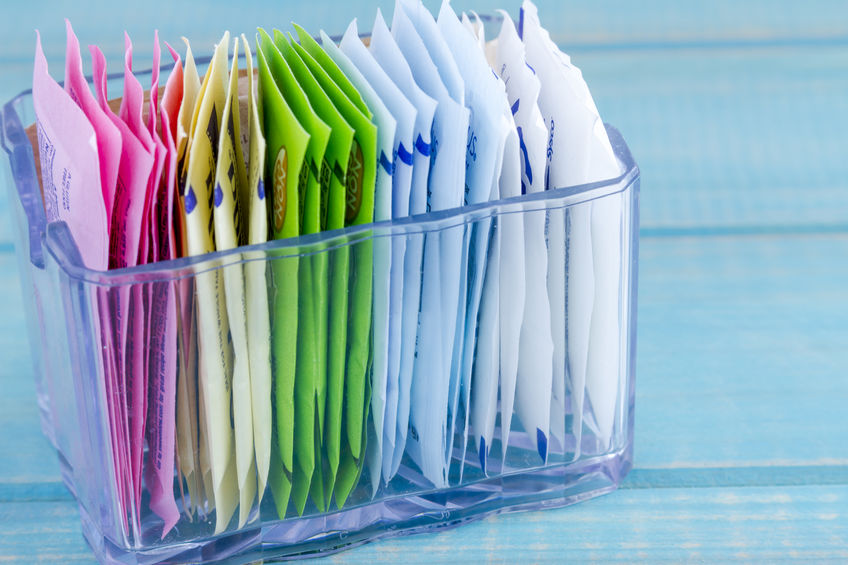
Saccharin
Saccharin was the first to be accidentally discovered and is the original non-nutritive sweetener. This means it is the most extensively studied, with over 2,000 studies under its belt. It was originally classified as an “anticipated human carcinogen” by the FDA in the 1970s (based on bladder tumors in male rats), but was formally delisted from that classification in 2000 after further research found the mechanism doesn’t apply to humans.
Saccharin is a man-made chemical that is 300x sweeter than sugar. This provides a potent sweetening flavor to anything it encounters, though many aren’t fond of the bitter, metallic aftertaste that accompanies it. Common brand names are Sweet N’ Low (the pink pack) and Necta Sweet.
Saccharin is not metabolized in the body and is excreted via the urine.
A note on the “sulfa allergy” warning: You may have seen saccharin labeled as a risk for people with sulfa drug allergies. This is a persistent myth. Saccharin doesn’t have the chemical structure that drives sulfonamide cross-reactivity, and the allergy literature doesn’t support a link. If a patient has a documented sulfa allergy, saccharin isn’t something they need to avoid on that basis.
Aspartame
Aspartame is the most widely used sugar substitute, commonly added to diet sodas, gums, and diet or “sugar free” foods. It’s 180x sweeter than sugar, and the most common brand names are Equal (the blue pack) and Nutrasweet.
Structurally, aspartame is made up of three components: phenylalanine, methanol, and aspartic acid. Once in the body, the methanol portion can be metabolized to formaldehyde, though at the doses found in food this occurs in amounts the body handles as part of normal metabolism (the same pathway processes methanol from fruit and other foods).
In July 2023, the WHO’s cancer research arm (IARC) classified aspartame as “possibly carcinogenic to humans” (Group 2B). This is the same category as things like aloe vera extract and pickled vegetables — based on limited evidence, specifically for liver cancer, and stated explicitly that chance, bias, or confounding could not be ruled out in the studies reviewed. In the same announcement, the WHO/FAO’s food additive safety committee (JECFA) reaffirmed the existing acceptable daily intake of 40 mg/kg body weight, concluding the evidence linking aspartame to cancer in humans “is not convincing.” The FDA disagreed with IARC’s classification and maintains aspartame on its “Generally Recognized as Safe” list.
Some individuals — particularly those with the genetic condition phenylketonuria (PKU), who cannot metabolize phenylalanine — must avoid aspartame entirely. Outside of that population, a subset of people report sensitivity symptoms like headaches or anxiety with aspartame, though controlled studies haven’t consistently reproduced this. Given the regulatory disagreement and the “possible but limited” nature of the cancer signal, this is a substance where I’d rather peopl minimize routine, high-volume intake and choose it consciously rather than by default — not because the evidence proves harm, but because it’s a genuinely unsettled question and there are lower-controversy options available.
Acesulfame K
Acesulfame K (Ace-K) is a newer artificial sweetener, approved in 1998 for use in soft drinks. It’s 200x sweeter than sugar. It’s rarely marketed as a standalone tabletop sweetener, but it’s a common component in “diet” drinks like Pepsi One or Coke Zero Sugar — usually blended with another sweetener to mask its slightly bitter aftertaste.
Ace-K is excreted unchanged in the urine. Some small studies suggest it may stimulate insulin secretion, but the evidence here is limited and less established than the effects noted for sucralose below. It’s the least researched of the artificial sweeteners on this list, given how recently it entered the market.
Sucralose
Sucralose, or Splenda (the yellow pack), is made by replacing hydroxyl groups on the sugar molecule with chlorine atoms. That structural change means only about 15% of it is absorbed, and even less is metabolized. Sucralose is roughly 600x sweeter than sugar.
Splenda is marketed as safe for people with diabetes, and manufacturer-funded research suggests no significant impact on blood glucose or A1C. However, a small study of 17 subjects found that sucralose increased insulin secretion and reduced insulin sensitivity, even without a rise in blood glucose. Because of this some researchers attribute to a quick, short lived insulin response, where the body anticipates incoming sugar based on taste alone. This is a single small study, not a settled finding, but it’s a reasonable basis for caution if you are managing insulin resistance.
Stevia
 Stevia is a natural sweetener made from the leaves of a plant in the sunflower family, native to Paraguay and Brazil but now primarily grown in China. It’s 250–300x sweeter than sugar, with the sweetness coming from compounds called steviol glycosides.
Stevia is heat- and pH-stable, making it useful for baking. It’s sold under brand names like PureVia, SweetLeaf, and Truvia (note: Truvia also blends in erythritol).
A 2018 study found stevia had no significant impact on blood glucose, HbA1c, or blood lipids in people with type 2 diabetes. Some research points to antioxidant compounds in stevia with potential anti-inflammatory properties, and a small, older 2003 study suggested a possible blood-pressure-lowering effect, though this hasn’t been well replicated in larger trials.
Sugar Alcohols
Sugar alcohols are made by adding hydrogen to a sugar molecule. You can identify them by the “-ol” suffix — sorbitol, xylitol, erythritol. They’re about half as sweet as sugar. Sugar alcohols aren’t calorie-free, but they’re lower in calories than table sugar and have minimal impact on blood glucose.
Like the other substitutes above, most sugar alcohols aren’t fully broken down in the digestive tract, which is exactly why they can cause GI symptoms in sensitive individuals — they’re classified as FODMAPs (fermentable sugars that draw water into the gut and ferment, leading to bloating, cramping, or diarrhea). Erythritol is the exception: it’s absorbed and excreted largely unchanged before reaching the colon, so it’s tolerated by most people better than the others in this category.
That said, sugar alcohols do prevent the rapid blood sugar rise associated with table sugar, which can make them a reasonable choice for people managing diabetes or hypoglycemia, in appropriate amounts.
Monk Fruit
Monk fruit, also called lo han guo, has been used for centuries but only recently gained popularity in the US. It comes from a Southeast Asian fruit and was approved by the FDA as a sweetener in 2010. It’s 100–250x sweeter than sugar.
The sweetness comes from antioxidant compounds called mogrosides, which may have anti-inflammatory properties. Animal studies suggest monk fruit may support healthier blood sugar and cholesterol levels, but there isn’t yet a robust body of human research given how new it is to the market. It’s available in granular form and can be used as a direct 1:1 replacement for sugar in baking and beverages (check the label — many blended monk fruit products cut it with erythritol or stevia).
Allulose
Allulose is a “rare sugar” — it occurs naturally in small amounts in figs, raisins, maple syrup, and wheat, and is now manufactured at scale (typically from corn) for commercial use. Structurally it’s a monosaccharide, chemically very close to fructose, but the body absorbs it without meaningfully metabolizing it for energy.
In 2020, the FDA finalized guidance allowing allulose to be excluded from the Total Sugars and Added Sugars lines on the Nutrition Facts panel (it’s still counted toward Total Carbohydrate), and to be counted at 0.4 calories per gram instead of the standard 4 calories per gram used for sugar. It’s about 70% as sweet as table sugar, and unlike stevia or monk fruit, it behaves very similarly to sugar in cooking and baking — it browns, dissolves, and adds bulk the way sucrose does, which is why it’s shown up in a wave of “keto” and reduced-sugar baked goods, syrups, and ice creams.
Early research suggests allulose produces negligible increases in blood glucose and insulin and doesn’t promote tooth decay. As a newer entrant, long-term human data is still limited compared to something like saccharin. The most common practical downside: like sugar alcohols, larger single servings can cause gas, bloating, or loose stool in some people, so starting with a smaller amount is reasonable advice for patients trying it for the first time.
What’s Best?
My general recommendation is to minimize routine reliance on both sugar and artificial sweeteners where practical. Regularly eating sweet-tasting foods — sweetened with sugar or with non-nutritive sweeteners — tends to keep sweet cravings active. Retraining the palate toward less overall sweetness tends to help more with long-term appetite regulation and blood sugar management than swapping one sweetener for another.
There’s a broader question worth flagging honestly: some research, including a widely cited 2017 study, found associations between artificial sweetener use and changes in gut microbiome composition, reduced satiety signaling, and increased obesity risk over time. This is an active area of research, not a closed case, and the mechanisms aren’t fully worked out — but it’s part of why “zero calories” doesn’t automatically mean “metabolically neutral.”
When a patient does want something sweet, my ranked recommendation is monk fruit, stevia, allulose, or erythritol, in roughly that order depending on the use case — allulose in particular is worth a closer look for baking applications where stevia and monk fruit fall short on texture and browning. These come with fewer open questions than the artificial sweeteners above and, for most people, can be part of a reasonable approach in moderation.
Are you willing to try new sweeteners?
This article was updated 8/2026.
Yes I am willing and I have multiplies in my pantry of the new and improved versions of sweetners. But, my “Don’t waste” Mom’s voice keeps telling me to finish all that I have before digging in to the new better ones. Why, Why?!?!?! Do I just throw them in the trash?
Yes, just throw them in the trash or you can donate anything unopened to a shelter or food pantry.
I have learned to drink my tea and coffee black. No added sugar in smoothies. But do enjoy a little chocolate at times. I have notice eating sweets makes you want more
Great job Christine!
How about honey
Honey is a nutritive sweetener, meaning it has calories and can impact blood sugar. It has phytonutrients that make it much better than sugar, so it depends on what your goals are.