
 The thyroid is a small butterfly-shaped gland that sits at the base of your neck, but despite its size, it plays a powerful role in your health. The hormones released by the thyroid influence nearly every cell in the body.
This small but mighty gland is responsible for many essential functions, including:
-
- Regulating your ability to lose or gain weight
- Supporting growth and development
- Influencing heart muscle function
- Affecting how your body digests food
- Supporting brain development
- Assisting with bone strength and maintenance, helping protect against osteopenia and osteoporosis
- Supporting hair growth
- Regulating body temperature
As you can imagine, when the thyroid isn’t functioning well, you probably won’t feel your best either.
Thyroid Function: Overactive vs. Underactive
The thyroid can function in two primary ways when things go wrong:
-
- Hyperthyroidism – when the thyroid is overactive and produces too much hormone
- Hypothyroidism – when the thyroid is underactive and does not produce enough hormone
Hypothyroidism is far more common. In the United States, it affects roughly 1 in 300 people, with women being diagnosed much more frequently than men.
By definition, hypothyroidism means the thyroid is not producing enough hormone, or the hormone being produced is not being used efficiently by the body.
To understand why this happens, it helps to know the basics of how the thyroid system works.
How the Thyroid System Works
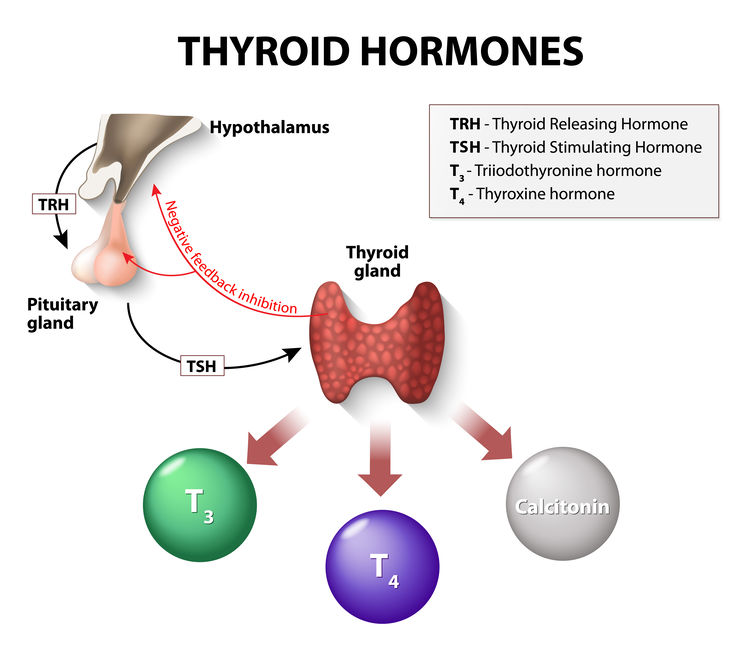 The thyroid doesn’t work alone—it is part of a communication system involving the brain and other organs.
Here is a simplified version of that process:
-
- The pituitary gland in the brain releases thyroid-stimulating hormone (TSH).
Think of TSH as a signal that “knocks on the door” of the thyroid, telling it to produce hormone. - The thyroid primarily produces thyroxine, also known as T4.
- Every cell in your body needs thyroid hormone, but the form your cells prefer to use is T3.
- T4 must be converted into T3 before your cells can use it efficiently. This conversion happens primarily in the liver, but also in the gut and other tissues.
- When enough T3 is available, your cells receive the hormone they need and your metabolism, energy, and body systems function properly.
- The pituitary gland in the brain releases thyroid-stimulating hormone (TSH).
However, if there is a breakdown anywhere in this system—whether in hormone production, conversion, or cellular use—your body may not receive the thyroid hormone it needs.
When this happens, symptoms of hypothyroidism can appear.
Common symptoms include:
-
- Fatigue
- Sensitivity to cold
- Weight gain or difficulty losing weight
- Constipation
- Depression or low mood
- Brain fog
- Muscle aches or cramps
- Dry skin or thinning hair
In simple terms, hypothyroidism means your body either isn’t producing enough thyroid hormone or isn’t converting it efficiently into the active form your cells need.
There is no cure for hypothyroidism, but it can often be effectively managed with medications that provide thyroid hormone.
What Is Hashimoto’s Disease?
This is where things become a little more nuanced.
Hashimoto’s disease is the most common cause of hypothyroidism in the United States. It is named after Japanese physician Hakaru Hashimoto, who first described the condition.
People with Hashimoto’s often experience the same symptoms as hypothyroidism, but the underlying cause is different.
Hashimoto’s is an autoimmune condition.
In autoimmune diseases, the immune system mistakenly attacks the body’s own tissues. In Hashimoto’s disease, the immune system targets the thyroid gland itself.
Over time, this immune attack can damage thyroid tissue and reduce the gland’s ability to produce hormones. As the thyroid becomes less efficient, hypothyroid symptoms develop.
In other words:
-
- Hypothyroidism describes the condition of having low thyroid hormone.
- Hashimoto’s describes one of the reasons why the thyroid hormone is low.
Why the Difference Matters
Many people are diagnosed with hypothyroidism and prescribed thyroid medication, which can be very helpful. However, in cases of Hashimoto’s disease, medication may only address part of the issue.
Because Hashimoto’s involves the immune system, it can also be important to explore factors that influence immune balance and inflammation.
These may include:
-
- Nutrition patterns
- Gut health
- Chronic stress
- Sleep quality
- Environmental exposures
- Nutrient deficiencies
Supporting these areas does not replace medication when it is needed, but it can sometimes help reduce immune system stress and support overall thyroid health.
Why Hashimoto’s Is Often Missed
One of the biggest challenges is that many healthcare providers do not always differentiate between hypothyroidism and Hashimoto’s disease.
Standard thyroid testing often includes:
-
- TSH
- Sometimes T4
However, diagnosing Hashimoto’s typically requires thyroid antibody testing, such as:
-
- Thyroid peroxidase antibodies (TPO antibodies)
- Thyroglobulin antibodies (Tg antibodies)
Without these tests, the autoimmune component may go unnoticed.
Understanding whether hypothyroidism is being caused by Hashimoto’s can help guide a more comprehensive approach to care.
The Takeaway
Hypothyroidism and Hashimoto’s disease are closely related but not identical.
-
- Hypothyroidism describes low thyroid hormone levels.
- Hashimoto’s disease is an autoimmune condition that often causes hypothyroidism.
Recognizing the difference can help individuals and healthcare providers look beyond symptoms and explore the underlying causes contributing to thyroid dysfunction.
If you are experiencing symptoms of hypothyroidism or have been diagnosed but still don’t feel like yourself, it may be worth having a more comprehensive thyroid evaluation and discussing lifestyle factors that support both thyroid and immune health.
Your thyroid may be small, but its impact on your energy, metabolism, mood, and overall well-being is significant. Supporting it well can make a meaningful difference in how you feel every day.

Thank you for the clarification. Very helpful information about the difference and how it’s diagnosed
Glad it’s helpful for you!