
Have you ever noticed that after a poor night’s sleep, you crave sugary foods, feel hungrier than usual, or experience an energy crash in the afternoon? This isn’t just in your head—your blood sugar plays a major role.
How Sleep Impacts Blood Sugar
Sleep, both good quality and quantity of sleep is essential for regulating hormones that control appetite, metabolism, and blood sugar balance. When sleep is disrupted, your body experiences hormonal shifts that can lead to unstable blood sugar levels. Here’s how:
Increased Cortisol:
-
- Poor sleep elevates cortisol, your body’s primary stress hormone. Higher cortisol levels can lead to increased blood sugar and insulin resistance.
Impaired Insulin Sensitivity:
-
- Just one night of inadequate sleep can make your cells less responsive to insulin for several days. This causes higher fasting blood sugar levels and over the long term, it can contribute to weight gain. Read here how using a CGM can help with weight loss.
Disrupted Hunger Hormones:
-
- Sleep deprivation increases ghrelin (the hunger hormone) and decreases leptin (the satiety hormone), making you feel hungrier and more likely to crave high carb, high sugar foods.
Energy:
-
- High carb, high sugar foods can momentarily boost your energy level which makes them very appealing when you are tired and fatigued.
A Continuous Glucose Monitor (CGM) can provide real-time insights into how sleep (or lack of it) affects your glucose levels and food cravings.
Using a CGM to Track Sleep and Blood Sugar
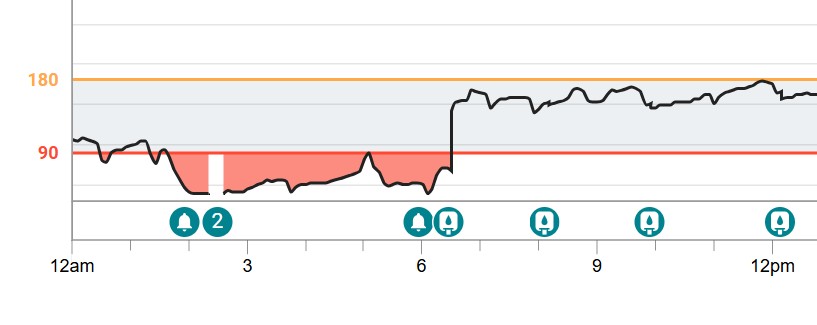
A CGM gives you 24/7 glucose data, allowing you to observe patterns and make informed choices. Here’s what to look for:
Nighttime Blood Sugar Fluctuations:
-
- A CGM can reveal if your blood sugar is dipping too low at night, potentially disrupting sleep and triggering early morning hunger or fatigue.
Morning Blood Sugar Trends:
-
- If your fasting glucose is higher after a bad night’s sleep, it may indicate increased stress and insulin resistance.
Post-Meal Spikes:
-
- Poor sleep can lead to exaggerated blood sugar spikes after meals, due to insulin resistance, especially when eating refined carbs or sugary foods.
How to Improve Sleep and Stabilize Blood Sugar
If your CGM shows a correlation between poor sleep and blood sugar instability, consider these strategies:
Optimize Evening Nutrition:
Avoid heavy meals, sugar, and alcohol within three hours before bedtime, as they can disrupt glucose levels overnight.
Establish a Sleep Routine:
-
- Going to bed and waking up at consistent times supports your circadian rhythm and improves insulin sensitivity.
Manage Stress:
-
- Practices like meditation, deep breathing, or journaling can help lower cortisol levels, reducing nighttime glucose fluctuations.
Prioritize Protein & Healthy Fats:
Monitor Your Data:
-
- Use CGM insights to experiment with different sleep habits and see what works best for stabilizing your blood sugar.
Final Thoughts
A CGM is a powerful tool for connecting the dots between sleep, blood sugar, and cravings. If you’re struggling with energy crashes, constant hunger, or sugar cravings, tracking your glucose patterns can provide clarity and help you make targeted lifestyle changes. By prioritizing high-quality sleep, you’ll not only feel more energized but also support stable blood sugar levels and healthier food choices.
Ready to take control of your cravings, energy, and weight? With my guidance and a CGM, we can uncover how your sleep patterns impact blood sugar and make personalized changes for lasting results. Let’s connect!